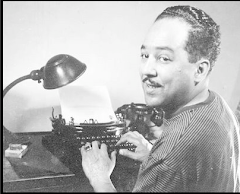
I’ll admit, I almost passed over Eduardo C. Corral, readying my eyes to skim the lines, just to have seen them, and move on to The Wind’s women poets listed in this week’s reading. I didn’t know anything about him except that he was a man and I was tired of reading men’s poetry, assuming it held experiences did not reflect my own. In the end, Corral was my favorite poet of the bunch and I learned that shared experience (shared feeling? I don’t have my notebook and forget what we substituted for universality) can come in the most unexpected moments, unexpected pieces of verse.
I can’t say that his experiences have been my own, because they have not, but the honesty with which he laid them on the page (and the beauty they took on through his delicate, visceral imagery!) kept me reading and rereading. We begin in the wilds of Tucson, wild animals in the night, and are suddenly witnessing Corral’s parents making love. He writes with such authority, as though he is describing his own lover—I sense not discomfort, but curiosity, sensuousness and the coming together of man, woman, sky and earth. The image of the crucifix in the mouth, roped around the throat, stays with me. The power of the mother’s desire throttles the father—the throws of intimacy crash against the question of mortality. She takes the crucifix in her mouth like the body of Christ, not asking to be forgiven of sins, but creating them. The mother is so much more visible than the father in this poem, and the poet’s obsession/voyeurism beams through this image. Finally, the poem ends with the images of stars and sperm mingling, like his mother’s body is all of the sky and the heavens.
Corral stays with the theme of sensuality, his sexual awakening and his relationship to his parents in the next poems, openly confronting and considering taboos. The racial profiling he is taught in his teenage job turns into the opportunity to nurture his budding sexual desires. Next, the lines, “I learned how to make love to a man / by touching my father.”—I’ve never read a line that is so unafraid. The scenes he offers in couplets are the same scenes we have seen in commercials for instant coffee, cereal or anti-depressants: father and son bonding, purely, innocently. But they are also laced with eroticism, an eroticism we might have ignored had the first lines not been to flatly declared. The coming together of parent-child relationships and early understanding of sexual desire is not uncommon, but seldom spoken—especially between father-son and mother-daughter. How often have we heard of Oedipal complexes with mothers and sons and the recasting of father-daughter relationships after a girl’s puberty? Here he lays is before us, sans trauma or shame. I was at first afraid to read on after the first two lines, afraid of what I would found. And what I found was something so innocent, so natural, and still so quietly exciting—I let myself read it again.
In the next poem we see him again in nature, again a voyeur, again consumed by his mother. How is his gaze at his mother’s sensuality different than the traces of eroticism between his father and himself? I feel this poem with nearly every sense—the leaves crackling on bare feet, a dress troubled by a breeze, the scent of crushed fennel seeds, an unfurling peacock’s tail against fruit crates. These sense memories deliver us from a future point (time unknown) to a scene etched into the poet’s childhood memory. He suggests the hairbrush is shining in the light of the moments before dusk, but I imagine he doesn’t remember what was shining—just remembers the light, and his mother’s luminosity, in a moment coveted, stolen, and carefully, deeply buried away.
His greatest lines, though, I found in section 2 of “Poem after Frida Kahlo’s Painting The Broken Column:” “Once a man offered me his heart like a glass of water.” Was ever a broken heart more aptly described? Having to push away the thing that you yearn for because you see that thing, that person, is incapable of seeing inside of you, from your eyes, is incapable or maybe, he simply won’t. “In bed while we slept, our bodies inches apart, the dark between our flesh a wick. It was burning down. And he couldn’t feel it.” The burning wick, the image of a dark, dividing chasm (“Not because he was a beast or white—“ what is unsaid here—that he cannot understand that he is white, or can be a beast) this image scorched me. Maybe we have all felt that wick, different kinds of wicks, burning down between us and the ones we wish to love.
And now, a brief moment with Vandana Khanna. In “The India of Postcards” I saw someone who was changed by the West returning to a place that is supposed to be theirs but—suddenly, tragically—is not. In another class I am reading Catfish and Mandala by Andrew X. Pham. He goes on a bicycle pilgrimage back to Vietnam, where he finds himself both the revered and despised as a Viet-kieu, Vietnamese who have left to become foreigners and returned. He shields himself against drivers’ racist epithets as he cycles up the U.S. west coast, then finds himself fainting and vomiting in the heat of Vietnam, no longer being able to stomach his people’s food. Here, too, Khanna (or the poet) cannot drink the water, is drugged on medication, plows through the city and tries to find something small enough for her suitcase to bring home as proof of who she is. The idea of plowing through the city is so simple and powerful—these are crowds she does not know how to navigate, and yet feels impelled to pass through. She admits to wanting to find, “the India of postcards with our faces on the front.” The rawness and honesty of this dense poem is so bold and inviting.
Then, I turn the page to “Two Women,” and feel completely lost. I have just seen the poet as a Westerner attempting a return to her estranged roots. Who are these women squatting in the sugar cane? I don’t see her in this poem; I only see a clichéd image of women—a couplet like the couplets of the poem—barefoot and working in servitude. Who are they? Is this a relative, her mother? A description of an image she has seen? The poem is political in that it identifies the class of these women, but it also seems to be grasping for a trite, romantic image—one we have seen too often. Why do the women recognize the Verdi coming out of the shudders? Why are lost love, war, motherhood and grandmotherhood covered in only two stanzas? The images in the previous poem may be familiar, but they are her own—at least this is my sense.
Showing posts with label vandana khanna. Show all posts
Showing posts with label vandana khanna. Show all posts
Sunday, September 13, 2009

i have new poet crushes!
I think I’ve found one of my new favorite poets. This is huge.
Lisa Asagi’s work takes me by the throat. She nails isolation, I mean really freakin nails it. Is her series of dated prose poems (April 14, 15, 22) part of a larger book? The acknowledgments say yes, that they first appeared in Twelve Scenes from 12 A.M. Incredible! Just incredible!
In “April 14,” Asagi sucks me in with her authoritative but delegating tone. She requires the reader to be responsible, she expects the reader to be comfortable without hand-holding and instead trusts us to read through the fragments easily as if we were following her through her sister’s house to the child’s room. Everything changes with the line, “And I wish it could stop,” referencing the plastic fish bobbing mechanically in circles. Before we even reach the following line (equally jarring and vortex-like), she transforms the color of the space from childlike to dark and very adult. I find it interesting that Asagi writes “could” instead of “would.” The phrase, “I wish it would stop,” which I find myself saying often when the dog next door won’t quit barking or when the craziness of scheduling rolls out of control, implies that whatever is happening is physically capable of stopping. That it can happen. When Asagi writes “I wish it could stop,” the room shuts down. She implies with one word a new level of intensity, of impossibility. The poet stops talking about the fish or the room in that moment. She speaks of something much bigger and immortal.
By the next line, we understand this futility, that the ability to stop is rendered hopeless. It expands from the room to the “motion of this living.” Bam! We climax here, this is the moment the poem has been building toward. And surprisingly, she eases us back out. I find that endearing and wonderful; most poets will bring you to the edge and leave you.
I thought a lot about how reading this particular work and others in this week’s reading has already changed my writing. I’m watching what they’re doing and absorbing the directions they’re giving me. I feel like I have new routes to travel, new and more exciting ways to arrive at similar spaces. This is exhilarating. These poets (and Asagi in particular) have rewired tiny parts of my brain, directionally. Even in “April 22,” Asagi writes “But it feels like one by one ropes are being untied and tossed onto a boat I am standing on.” How many times have you known that feeling but not articulated it in a way that makes sense to someone or hasn’t been done a million times? God, I’m in love.
Other poets that are teaching me things:
Agha Shahid Ali, in the poem “A List Memory of Delhi,” re-introduces me to film on the page. The poem reads as if each stanza is a clip from a movie, a series of short scenes in which we get a larger story with ineffable motion. We are literally moving through the poem, we are the camera lens. (This is also really helpful to me for selfish reasons in that I am currently writing poems about memories for which I was not present, much like Ali’s retelling of a time when he was not yet born. Awesome.)
Brandy Nalani McDougall’s poem “How I Learned to Write My Name,” is using similar techniques, but feels more like a single camera angle that moves in and out of focus between the foreground and the background. While she is remembering how she learned to write her name, she’s using this foreground to tell the real story of her father stealing from her mother and leaving while her mother is in the shower, in the background. The distraction is what tells the story, the poem sits at the fuzzy place in between foreground and background. Such a smart and beautiful poem.
Similarly, I thought a lot about how I might learn from these poets’ particular stylistic choices. I’ve already expressed my conflicting feelings about this idea of “published = finished” on the blog, and I by no means intend to try to edit or workshop these poets. Still, I look at Vandana Khanna’s poem “Alignment” on page 83, for example, and wonder at the job that the asterisks are performing (all the while knowing Elmaz is secretly cringing, hah). I wonder why space is not enough to separate these stanzas and think back to my own work, wondering if & where such punctuation (is an asterisk a punctuation mark?) might function, much less benefit, the poem. I’m also looking at that last stanza where it is mentioned that the parents of the narrative voice met with an astrologer to see if their “stars were aligned.” Could this be a physical/visual enactment of that stanza’s intention, that all of these stars (four sets of three) are aligned neatly & reliably? Whether or not this is the case, I begin thinking about different ways to accomplish the same affect without using a symbol like the asterisk. Khanna has me thinking stylistically and I appreciate it.
Lisa Asagi’s work takes me by the throat. She nails isolation, I mean really freakin nails it. Is her series of dated prose poems (April 14, 15, 22) part of a larger book? The acknowledgments say yes, that they first appeared in Twelve Scenes from 12 A.M. Incredible! Just incredible!
In “April 14,” Asagi sucks me in with her authoritative but delegating tone. She requires the reader to be responsible, she expects the reader to be comfortable without hand-holding and instead trusts us to read through the fragments easily as if we were following her through her sister’s house to the child’s room. Everything changes with the line, “And I wish it could stop,” referencing the plastic fish bobbing mechanically in circles. Before we even reach the following line (equally jarring and vortex-like), she transforms the color of the space from childlike to dark and very adult. I find it interesting that Asagi writes “could” instead of “would.” The phrase, “I wish it would stop,” which I find myself saying often when the dog next door won’t quit barking or when the craziness of scheduling rolls out of control, implies that whatever is happening is physically capable of stopping. That it can happen. When Asagi writes “I wish it could stop,” the room shuts down. She implies with one word a new level of intensity, of impossibility. The poet stops talking about the fish or the room in that moment. She speaks of something much bigger and immortal.
By the next line, we understand this futility, that the ability to stop is rendered hopeless. It expands from the room to the “motion of this living.” Bam! We climax here, this is the moment the poem has been building toward. And surprisingly, she eases us back out. I find that endearing and wonderful; most poets will bring you to the edge and leave you.
I thought a lot about how reading this particular work and others in this week’s reading has already changed my writing. I’m watching what they’re doing and absorbing the directions they’re giving me. I feel like I have new routes to travel, new and more exciting ways to arrive at similar spaces. This is exhilarating. These poets (and Asagi in particular) have rewired tiny parts of my brain, directionally. Even in “April 22,” Asagi writes “But it feels like one by one ropes are being untied and tossed onto a boat I am standing on.” How many times have you known that feeling but not articulated it in a way that makes sense to someone or hasn’t been done a million times? God, I’m in love.
Other poets that are teaching me things:
Agha Shahid Ali, in the poem “A List Memory of Delhi,” re-introduces me to film on the page. The poem reads as if each stanza is a clip from a movie, a series of short scenes in which we get a larger story with ineffable motion. We are literally moving through the poem, we are the camera lens. (This is also really helpful to me for selfish reasons in that I am currently writing poems about memories for which I was not present, much like Ali’s retelling of a time when he was not yet born. Awesome.)
Brandy Nalani McDougall’s poem “How I Learned to Write My Name,” is using similar techniques, but feels more like a single camera angle that moves in and out of focus between the foreground and the background. While she is remembering how she learned to write her name, she’s using this foreground to tell the real story of her father stealing from her mother and leaving while her mother is in the shower, in the background. The distraction is what tells the story, the poem sits at the fuzzy place in between foreground and background. Such a smart and beautiful poem.
Similarly, I thought a lot about how I might learn from these poets’ particular stylistic choices. I’ve already expressed my conflicting feelings about this idea of “published = finished” on the blog, and I by no means intend to try to edit or workshop these poets. Still, I look at Vandana Khanna’s poem “Alignment” on page 83, for example, and wonder at the job that the asterisks are performing (all the while knowing Elmaz is secretly cringing, hah). I wonder why space is not enough to separate these stanzas and think back to my own work, wondering if & where such punctuation (is an asterisk a punctuation mark?) might function, much less benefit, the poem. I’m also looking at that last stanza where it is mentioned that the parents of the narrative voice met with an astrologer to see if their “stars were aligned.” Could this be a physical/visual enactment of that stanza’s intention, that all of these stars (four sets of three) are aligned neatly & reliably? Whether or not this is the case, I begin thinking about different ways to accomplish the same affect without using a symbol like the asterisk. Khanna has me thinking stylistically and I appreciate it.
Subscribe to:
Comments (Atom)